My research examines how ecological, physiological and environmental processes shape species distributions, population dynamics and responses to change. I am interested in both the decline of vulnerable populations and the establishment and spread of invasive species, as well as in how variation within species can influence ecological patterns and predictions.
Across my academic work, I have combined field and laboratory research with spatial analysis and ecological modelling. This has included research on breeding ecology and the conservation of declining bird populations, alongside mechanistic approaches to forecasting biological invasion risk under current and future environmental conditions. More broadly, I am interested in how ecological evidence can support biodiversity conservation, environmental policy and informed decision-making.
Scientific work
PhD research
Mechanistic forecasting of biological invasions: a case study on the common waxbill Estrilda astrild
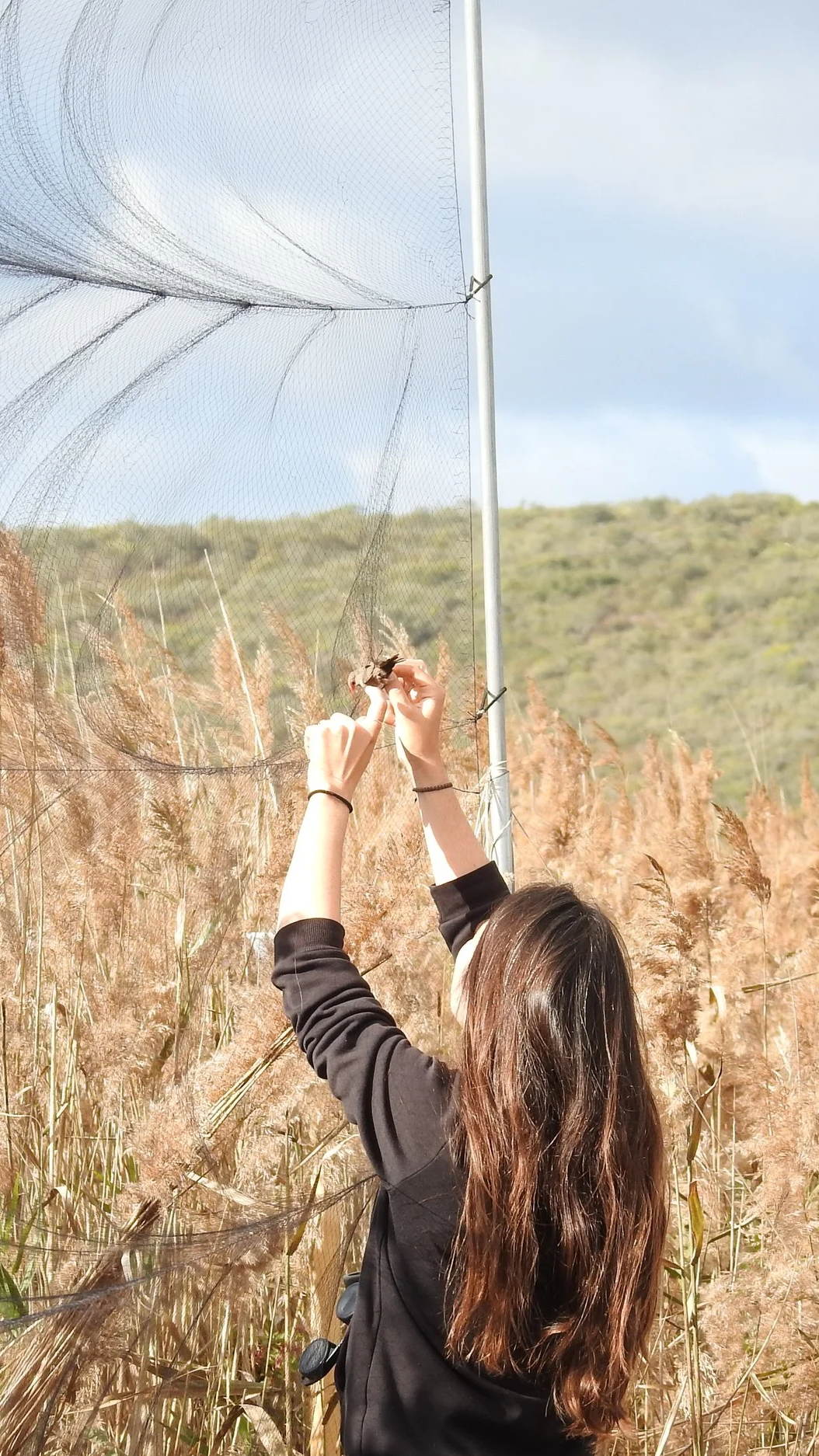
My doctoral research evaluated the use of mechanistic ecophysiological models for forecasting biological invasion risk, using the common waxbill as a model system. I first assessed how accurately the model simulated the thermal energetics of a small bird and then used it to forecast the species’ potential distribution across Europe under current and future climate conditions.
A central focus of my research was whether representing a species through a single set of average traits is sufficient for reliable predictions. By measuring physiological and morphological variation across populations, seasons and native and invasive ranges, I examined how much individuals within a species differ and whether incorporating this variability influences invasion-risk forecasts.
Overall, this research showed how combining biological data with mechanistic modelling can strengthen predictions of where invasive species may establish and spread under changing environmental conditions.
Earlier research
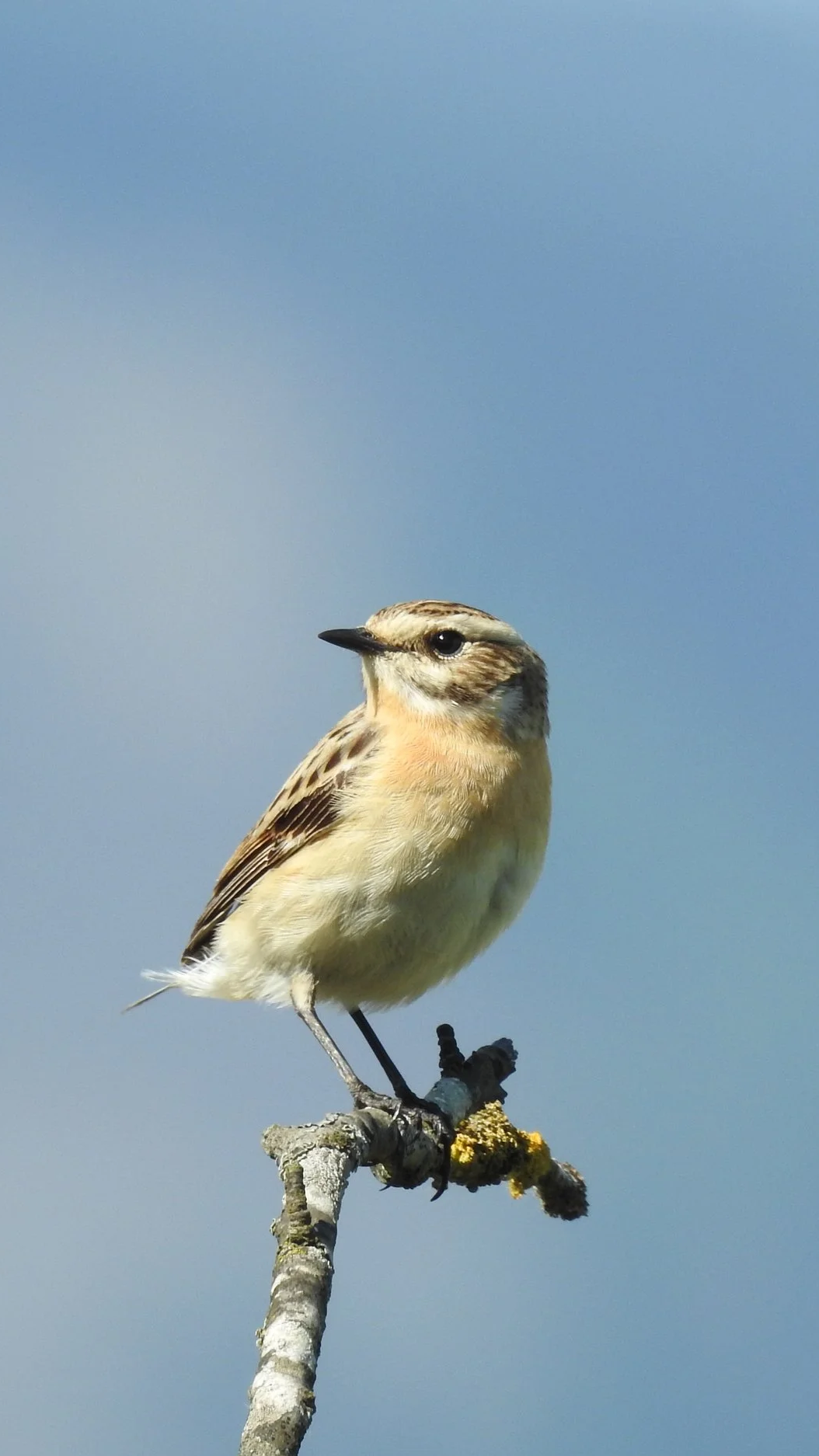
Breeding success and food provisioning in a declining population of whinchats Saxicola rubetra
My master’s research investigated factors contributing to the decline of whinchats by comparing their breeding ecology with that of stonechats, whose populations had increased in the same protected wetland. Across three sites with different land-management regimes, I combined nest monitoring, camera recordings and field observations to examine reproductive success and parental provisioning.
A central focus was whether the contrasting population trends of the two species could be explained by differences in breeding performance or local habitat conditions. Whinchats had substantially lower breeding success, while feeding rates and the prey delivered to nestlings were broadly similar, suggesting that food provisioning alone was unlikely to explain their decline.
Overall, the findings highlighted the importance of breeding habitat and land management for declining farmland birds. They supported measures such as protecting traditionally managed grasslands and delaying mowing during the breeding season, providing evidence relevant to conservation planning and agri-environmental decision-making.
Peer-reviewed publications
First author
Sentís M, Pacioni C, Bossuyt E, Bushuev A, Kerimov A, Reino L, Lens L, Strubbe D (2025) Ecophysiology of an avian invader: body condition and metabolic rate adjustments to ambient temperature. Integrative Zoology; 26:1-7
Sentís M, Pacioni C, Reino L, Downs C, Lens L, Strubbe D (2025) Energetic metabolism and condition indices in native versus invasive common waxbills. NeoBiota; 99:229-48
Sentís M, Pacioni C, De Cuyper A, Janssens G, Lens L, Strubbe D (2023) Biophysical models accurately characterize the thermal energetics of a small invasive passerine bird. iScience; 26: 107743.
Sentís M, Chang Y, Scherz M, Prötzel D, Glaw F (2018) Rising from the ashes: resurrection of the Malagasy chameleons Furcifer monoceras and F. voeltzkowi (Squamata: hamaeleonidae), based on micro-CT scans and external morphology. Zootaxa; 4483: 549-566.
Pacioni C, Danneels H, Dutrieux L, Sentís M, Lens L, Strubbe D (2026) Metabolic responses at sub-thermoneutral temperatures in captive common waxbills (Estrilda astrild). Comparative Biochemistry and Physiology Part A: Molecular & Integrative Physiology. 14:112047.
Bushuev AV, Tolstenkov OO, Palko IV, Pacioni C, Strubbe D, Lens L, Sentís M, Nguyễn LV, Nguyễn VT, Kerimov AB (2025) Migratory Birds on Wintering Grounds in Tropics Have a Higher Basal Metabolic Rate than Tropical Residents. Ecological and Evolutionary Physiology; 98
D’Amelio PB, Carlson NV, Tognetti A, Sentís M, Silva LR, Rybak F, Covas R, Doutrelant C (2025) Is provisioning rate of parents and helpers influenced by the simulated presence of novel individuals? Behavioural Ecology and Sociobiology; 79:14
Pacioni C, Bushuev A, Sentís M, Kerimov A, Ivankina E, Lens L, Strubbe D (2024) Metabolic adjustments to winter severity in two geographically separated great tit (Parus major) populations. Journal of Experimental Zoology Part A; 341:410-20
Pacioni C, Sentís M, Hambly C, Speakman JR, Kerimov A, Bushuev A, Lens L, Strubbe D (2023) Great tits (Parus major) in a west European temperate forest show little seasonal variation in metabolic energy requirements. Journal of Thermal Biology; 118:103748
Pacioni C, Sentís M, Kerimov A, Bushuev A, Lens L, Strubbe D (2023) Seasonal variation in thermoregulatory capacity of three closely related Afrotropical Estrildid finches introduced to Europe. Journal of thermal biology; 113:103534.